North Country Brewing Company

North Country Brewing Company

North Country Brewing Company

From farm to fork, to front and center on the shelves - A brand update

From farm to fork, to front and center on the shelves - A brand update

From farm to fork, to front and center on the shelves - A brand update

Problem: North Country Brewing Company opened in the early 2000s as a brew pub. About 15 years later, they decided to expand the operations to focus on being a regional powerhouse. What they didn’t expect was that what worked for their brew pub might not work at a production facility. This came out in their branding as unclear and non-distinctive. They were operating their production business like it was a brew pub. These two distinctive brewery styles needed to find common ground, or a common voice, if they were going to both find success.


Goal: Develop clear brand identity that creates a cohesive voice for the restaurant locations and distribution portfolio. This will include:

  • Clear brand identity & voice

  • Evaluate current brands based on sales - internally and in the market

  • Update can label design to create a cohesive vision and voice that would appeal to their current customers, and attract the customers they are looking for in their distribution market.

Role:

Role:

Production Manager | Design Strategist | Facilitator

Background: I was hired in 2019 as a production manager, overseeing both the production team and the sales team, to increase production sales and ultimately help make their 5-year-old production brewery self-sustaining. Up to that point, their two restaurants - one being their original pub of 20 years - had been supporting this location financially. I immediately saw problems with equipment, skill level, sales, and marketing. First, we restructured our team, with me handing the sales reins to someone who was in sales. Second, I created an updated inventory system within Google Sheets to give the sales team a live view of our inventory. This was the precursor to paying for a program that did this for us. I just needed to prove the concept. The branding was all over the place. The best way I can describe their business was that they were trying to operate a production, distributing brewery like it was a brew pub. Branding and marketing included. There was no cohesive vision or voice. While I helped the brewery get the production side in order, I worked with our in-house graphic designer to refresh the branding.

Background: I was hired in 2019 as a production manager, overseeing both the production team and the sales team, to increase production sales and ultimately help make their 5-year-old production brewery self-sustaining. Up to that point, their two restaurants - one being their original pub of 20 years - had been supporting this location financially. I immediately saw problems with equipment, skill level, sales, and marketing. First, we restructured our team, with me handing the sales reins to someone who was in sales. Second, I created an updated inventory system within Google Sheets to give the sales team a live view of our inventory. This was the precursor to paying for a program that did this for us. I just needed to prove the concept. The branding was all over the place. The best way I can describe their business was that they were trying to operate a production, distributing brewery like it was a brew pub. Branding and marketing included. There was no cohesive vision or voice. While I helped the brewery get the production side in order, I worked with our in-house graphic designer to refresh the branding.

July 2019 - October 2021

Tools:

Timeline:

July 2019 - October 2021

Google Suite, Adobe

About

Google Suite, Adobe

Tools:

Timeline:

Google Suite, Adobe

July 2019 - October 2021

Problem: North Country Brewing Company opened in the early 2000s as a brew pub. About 15 years later, they decided to expand the operations to focus on being a regional powerhouse. What they didn’t expect was that what worked for their brew pub might not work at a production facility. This came out in their branding as unclear and non-distinctive. They were operating their production business like it was a brew pub. These two distinctive brewery styles needed to find common ground, or a common voice, if they were going to both find success.


Goal: Develop clear brand identity that creates a cohesive voice for the restaurant locations and distribution portfolio. This will include:

  • Clear brand identity & voice

  • Evaluate current brands based on sales - internally and in the market

  • Update can label design to create a cohesive vision and voice that would appeal to their current customers, and attract the customers they are looking for in their distribution market.

Role:

Production Manager | Design Strategist | Facilitator

Background: I was hired in 2019 as a production manager, overseeing both the production team and the sales team, to increase production sales and ultimately help make their 5-year-old production brewery self-sustaining. Up to that point, their two restaurants - one being their original pub of 20 years - had been supporting this location financially. I immediately saw problems with equipment, skill level, sales, and marketing. First, we restructured our team, with me handing the sales reins to someone who was in sales. Second, I created an updated inventory system within Google Sheets to give the sales team a live view of our inventory. This was the precursor to paying for a program that did this for us. I just needed to prove the concept. The branding was all over the place. The best way I can describe their business was that they were trying to operate a production, distributing brewery like it was a brew pub. Branding and marketing included. There was no cohesive vision or voice. While I helped the brewery get the production side in order, I worked with our in-house graphic designer to refresh the branding.

About

Research & Discovery

Research & Discovery

Ideation & Analytical Review:

Early in the project, I introduced the team to the concept of 1000 true fans, the idea that a brand doesn't need to be everything to everyone, it needs a core audience who feels genuinely connected to it, and everything else follows from there. That reframing mattered because North Country wasn't actually starting from nothing. Once we started digging into where the brewery came from, two real, already-existing identities surfaced. Their restaurant concepts, based in Slippery Rock, a rural hub outside Pittsburgh, had always leaned into farm to table and farm to fork, locally sourced, home made, food that came from somewhere specific. And the brewery's own name was a clue they weren’t fully leaning into yet. North Country Brewing Company was named after the North Country Trail, an outdoors-focused identity sitting right there. I pitched this back to the team as the actual foundation for a cohesive voice, not inventing something new.

From there I evaluated the sales performance of brands already in distribution, looking specifically at which ones had real traction and which felt like they could sit together in a lineup without fighting each other for attention. That process narrowed things down to a smaller set of brands that felt like a legitimate starting point for a unified identity rather than a grab bag of whatever had sold okay in the past.


Concepts we explored


With a direction set, we brainstormed names and campaign ideas that could carry the outdoors thread through an entire product line:

  • Trail Series - tied directly back to the brewery's namesake. This would become a stable Double IPA series.

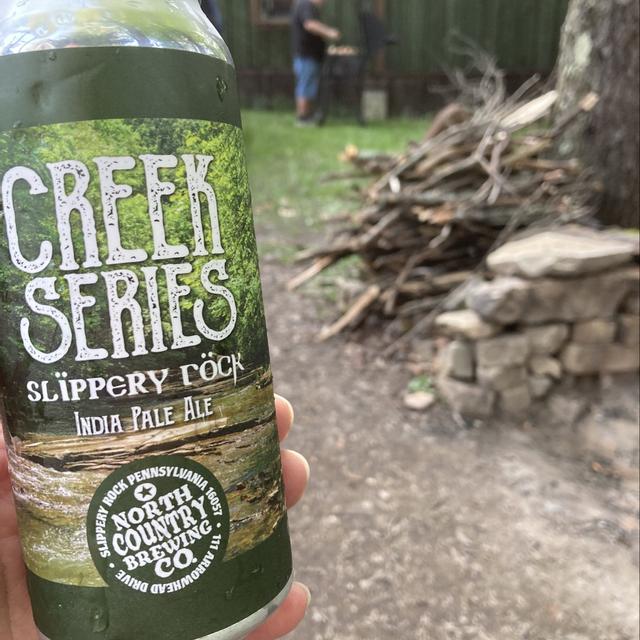
  • Creek Series - built around specific creeks within the distribution market, giving the line a sense of place. This would become a stable IPA series.

  • Other Examples:

    • Cobbknocker - S'more Stout (previously "Ugg Lyfe")

    • Snow Shoe Winter White

    • Backpack Stash - Pale Ale

    • Baselayer - German Schwarzbier

    • Fieldnotes - Märzen

    • Idle Acres - Milkshake Style Sour Ale (part of a broader sour series)

Results / Testing:

Results / Testing:

We received positive feedback on our newly released Trail and Creek Series beers. Some of our major distributors requested to have a Trail or Creek Series beer that was in their region. This told us that people were connecting to these particular brands, exactly as we hoped. We gladly obliged and rotated these series throughout the year. It also allowed us to plan production with a bit more certainty. 


There were several systemic issues that I inherited as a production manager. When facing each one, I remained logical and determined to find the best option for the company. 


What we could not have expected during this time was the COVID-19 pandemic starting in 2020. Like many other businesses, we had to learn how to exist under unknown conditions and try to survive. 


We turned a tragedy into a positive: All sales turned to packaged product. We were positioned to continue to package our products (safely). This allowed us to use up older, 12-ounce cans - one of the systemic problems I inherited. Before this situation, I calculated that it would take us approximately five years in total to go through the truckloads of cans the company had ordered. The logic was sound at the time, but three years later, they were nowhere close to using them up. Since we were strictly canning and kegging, we were able to redesign the four staple brands in addition to the seasonal and specialty brands.

Evaluation:

Evaluation:

With all the hills we had to climb, we were able to get in the black for a few months that first year (during the pandemic), which, given everything happening, felt like a real win, even a small one. Nobody was popping champagne over it, a few months of profit isn't the same as being out of the woods, but coming from where we started, mid-pandemic, restaurants shut down or running at half capacity, distributors themselves scaling back orders because nobody knew what the next month looked like, just breaking even felt like something. We'd built this whole brand redesign around the idea that people would actually connect to the Trail and Creek Series as brands, not just buy whatever was cheapest or closest, and those few black months were kind of the first real proof that theory held up even when almost nothing else around us was stable. It didn't erase the slow growth everywhere else, that was still very much the story of that year, but it gave us something to point to and say, this part is working, keep going.